 About theWebrary
Our Process: How theWebrary Reviews and Rates AI Tools
If you’ve spent any time on theWebrary, you’ve probably noticed that every tool in our directory comes with a detailed review, a rating, and a breakdown of pricing, use cases, and alternatives. What you might not know is what goes into producing that content — and why we built this process in the first place.
This article is our attempt to be fully transparent about how we work.
Why I Built theWebrary
My name is Deve, and I’ve been deep in the AI tools space since 2024. What started as personal curiosity quickly turned into something I couldn’t put down. I was testing everything — Claude Code, ChatGPT, OpenAI’s API, ElevenLabs, and dozens more. Each tool solved a different problem. Each had its own learning curve, pricing quirks, and hidden limitations that you only discovered after signing up.
The frustrating part wasn’t the tools themselves. It was finding them.
Every time I searched for an AI tool recommendation, I’d land on one of two things: a paid-placement listicle dressed up as editorial content, or a shallow directory that just mirrored whatever the tool’s own marketing page said. Neither was actually helpful.
I wanted one place — a single website — where someone could go and immediately find curated, honest information about AI tools without wading through noise. A place that could inspire people to explore what’s out there, not just validate a purchase they’d already decided to make. That’s what theWebrary is. It started from a genuine passion, and that’s still what drives it.
How We Find Tools to Review
We source tools through several channels:
Community submissions. Anyone can submit a tool through our submission form. Every submission is manually reviewed before it goes live. We don’t publish tools that lack a functioning product, a clear use case, or basic pricing transparency.
Active research. We monitor Product Hunt launches, AI newsletters, developer communities, and social media to catch tools worth covering early.
Reader requests. If you’ve emailed us asking about a specific tool, there’s a good chance it’s already in our review queue.
We do not accept payment to add a tool to the directory. Our featured listing program exists separately and is clearly labelled — it gives tools extra visibility, but it never influences the content of a review.
How We Research Each Tool
Before writing a review, we go through the following:
- Visit the official website and read everything — the homepage, pricing page, documentation, and any public changelog.
- Use the tool where possible. For free and freemium tools, we test the product directly. For paid-only tools, we work from publicly available demos, documented feature comparisons, and verified user experiences.
- Check third-party sources. We look at user reviews on Product Hunt, Reddit threads, and community forums to get a sense of real-world experience beyond the official marketing.
- Verify pricing accuracy. Pricing in the AI tools space changes frequently. We confirm current pricing at the time of writing and flag when a tool’s pricing page lacks transparency.
How We Write Reviews
Our reviews are written by the theWebrary editorial team. We use AI assistance in the drafting stage — to help structure and summarize technical information — but every review is read, edited, and fact-checked by a human editor before it goes live. Any section that doesn’t accurately reflect what we found in research gets rewritten.
We believe in disclosing this clearly. AI-assisted drafting is a tool, not a replacement for editorial judgment. If a tool has a known limitation, a controversial pricing model, or a history of negative user feedback, that information belongs in the review — full stop.
How We Rate Tools
Every tool on theWebrary receives a rating from 1.0 to 5.0. Here’s what each range generally reflects:
- 4.5 – 5.0: Exceptional tools that deliver on their core promise, offer strong value for the price, and have a track record of reliability.
- 3.5 – 4.4: Solid tools with a clear use case. May have limitations but are genuinely useful for the right audience.
- 2.5 – 3.4: Average tools. Functional but not standout. Often better free alternatives exist, or the pricing doesn’t match the value delivered.
- Below 2.5: Tools with significant issues — misleading marketing, poor reliability, or pricing that we consider unreasonable for what’s offered.
Ratings are editorial opinions, not algorithmic scores. They reflect a point in time — tools improve, pricing changes, and we update reviews when warranted.
How We Handle Featured Tools
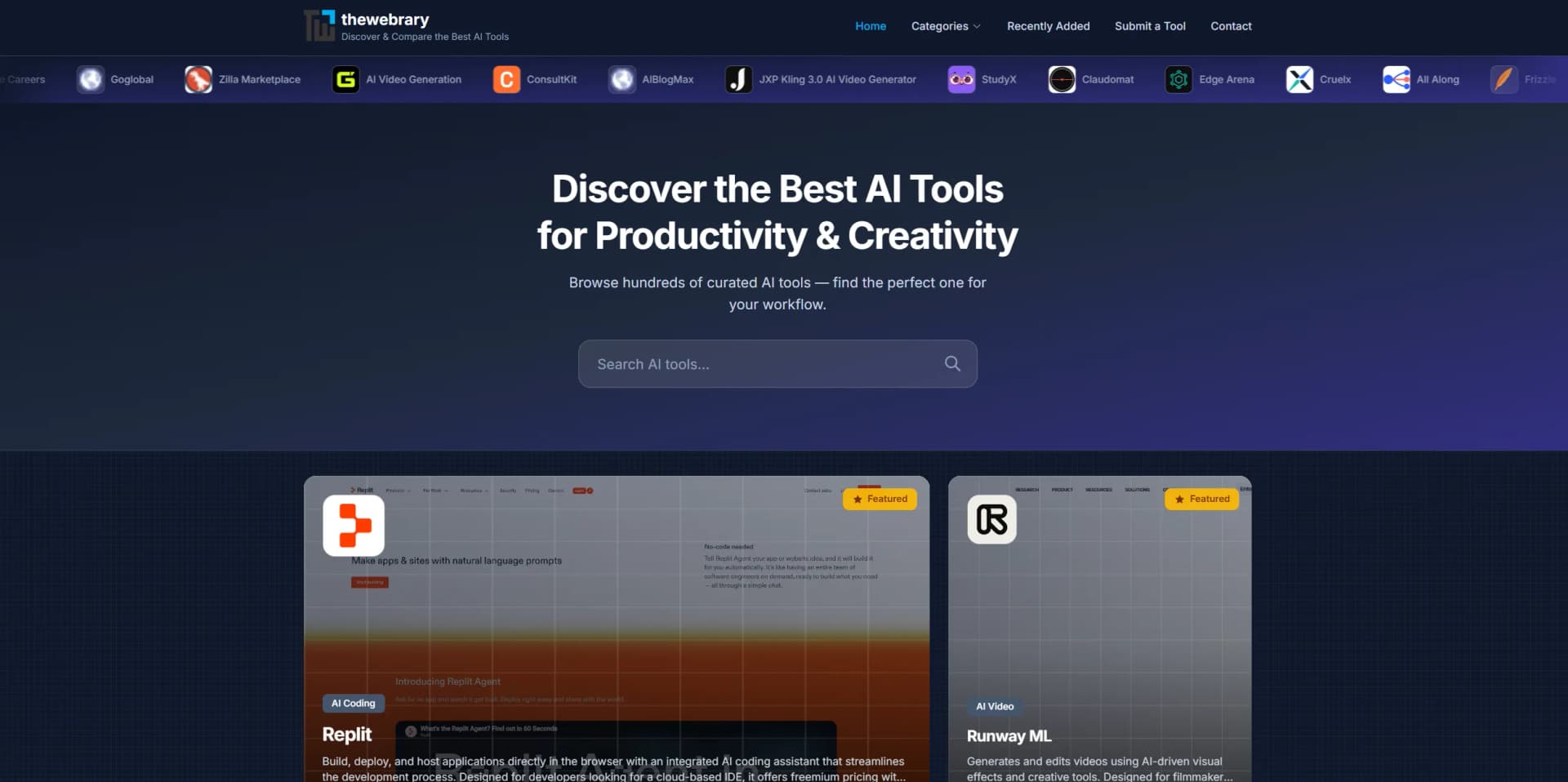
theWebrary offers a paid featured listing program. Featured tools appear in highlighted positions on the homepage and category pages. This is how we keep the directory free to use.
Featured placement is never tied to review content. A tool that pays for a featured listing receives the same honest review as any other tool. We would rather lose a listing fee than publish a misleading review.
How Often We Update Reviews
The AI tools landscape moves fast. We aim to update listings whenever there is a significant change to pricing, features, or product direction. If you notice that a review is outdated or contains inaccurate information, please contact us — we take those reports seriously.
A Note on Transparency
theWebrary is an independent publication run by a small team. We don’t have the resources of a large media company, and we’re not pretending otherwise. What we do have is firsthand experience using these tools, a genuine interest in helping people make better decisions, and a commitment to keeping this directory honest and free from pay-to-play editorial influence.
If you have questions about our process, feedback on a specific review, or a tool you think we’ve missed, get in touch. We read every message.
Written by
Deve
Founder, theWebrary
Deve has been exploring AI tools since 2024, testing everything from large language models to productivity apps and code assistants. He built theWebrary to make it easier for people to find honest, curated information about the tools that are actually worth their time.