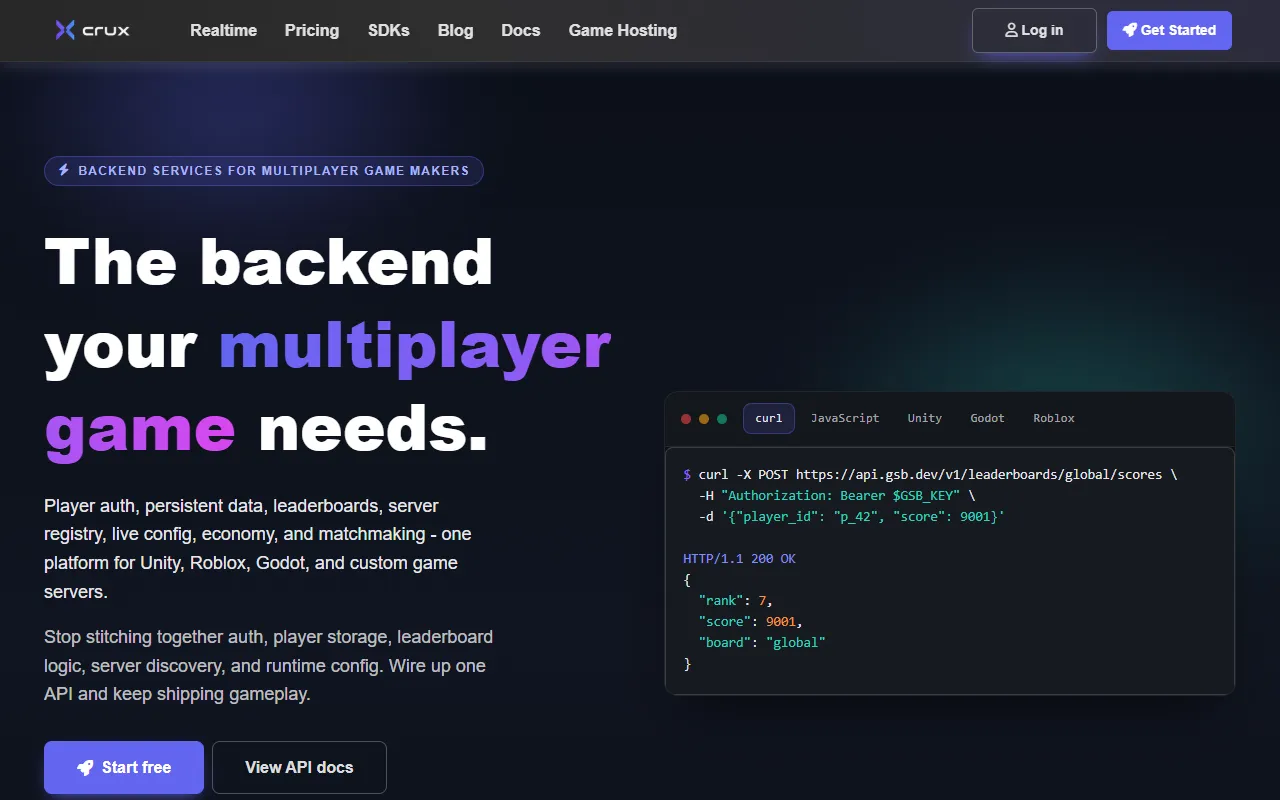
Game Server Backend
GSB: all-in-one multiplayer game backend for seamless scaling, live ops, and player management.
Game Server Backend — official website
Imagine you’re an indie game developer knee-deep in creating a multiplayer game. You’ve got a tight schedule, and the backend development is slowing you down. You don’t have the luxury to stitch together disparate services for authentication, leaderboards, matchmaking, and server management. What you need is a unified solution that handles all these backend tasks, allowing you to focus on gameplay and rapid iteration. This is where a comprehensive game server backend tool becomes crucial, especially if you’re working within the Unity, Roblox, Unreal, or Godot ecosystems.
Crux provides a unified platform designed specifically for multiplayer game development. One standout feature is its seamless player authentication system, which supports various methods like email, OAuth, and even Roblox verification. You set up the authentication parameters, and it securely manages player logins and sessions. This means you can avoid building a custom authentication system from scratch, saving you precious development time. Based on the tool’s own marketing, Crux eliminates the need to combine multiple tools for backend tasks, streamlining everything from player data management to matchmaking under a single API.
Key Features
- Player Authentication — Manages email, OAuth, guest sessions, and more, easing the onboarding process for players.
- Persistent Player Data — Offers JSON document storage for player progression and profiles, ensuring consistent game experiences.
- Leaderboards — Supports ranked and seasonal boards, essential for competitive gameplay with anti-cheat measures.
- Economy Management — Provides tools for handling in-game currencies and transactions, vital for monetization strategies.
- Matchmaking — Facilitates player grouping with customizable rulesets, improving the multiplayer experience.
Pros & Cons
- ✓ Comprehensive feature set across all plans, including free tier
- ✓ Environment-aware design simplifies moving from prototype to production
- ✓ No hidden fees or per-seat charges, clear monthly pricing
- ✗ The free tier limits you to 2,000 monthly active users, which may not suffice for larger games
- ✗ Custom plan pricing is not disclosed and requires contacting sales
While Crux offers a robust set of features, it might not be ideal for larger studios or games that quickly exceed the 2,000 monthly active users limit offered in the free tier. For these users, hitting the cap could mean unexpected halts in service or having to rapidly upgrade to a costlier plan. Additionally, those needing highly customized backend solutions may find the off-the-shelf features insufficient without further customization, which could lead to frustration.
Compared to PlayFab and Nakama, Crux stands out with its straightforward pricing plans and comprehensive set of features available at every tier. PlayFab might be preferable for larger, enterprise-level studios due to its extensive integration options, while Nakama offers a more community-driven, open-source alternative that appeals to developers wanting more customization control. Choose Crux if you value simplicity and want an all-in-one solution without hidden costs.
Best For
Crux is best suited for indie game developers and small studios that need a reliable backend without the hassle of integrating multiple services. Its clear pricing model—free for up to 2,000 MAU and $10/month for 25,000 MAU—makes it accessible for those working with limited budgets. Teams using Unity, Roblox, Godot, or Unreal would benefit most from its seamless integration capabilities.
Crux is a solid choice for indie developers seeking a comprehensive backend solution for multiplayer games. With all essential features included across plans and an easy-to-understand pricing model, it’s particularly beneficial for small teams or solo developers looking to streamline their backend operations. Crux is recommended for anyone who values simplicity and efficiency in managing game server backends.
This review is based on publicly available information from the tool's official website and is written independently by the theWebrary editorial team. We do not accept payment for review content.
Share
Tool Overview

Latest Featured


Browse More Tools
View all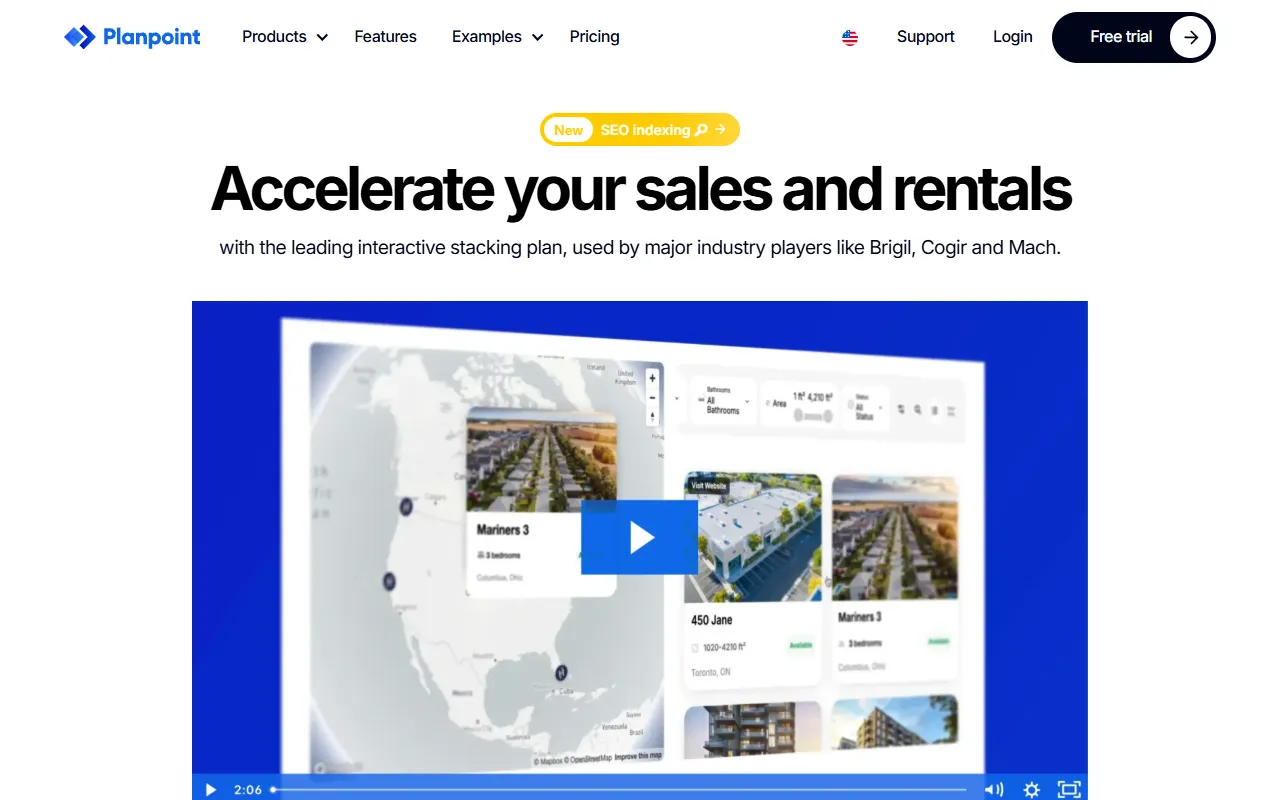
Planpoint
AI ProductivityCreate interactive stacking plans for real estate properties with Planpoint. Designed for property owners and managers, it offers a user-friendly interface tailored to various sectors. Access is free, making it an accessible choice for all users.

Pawjojo
AI ResearchLog meals, medications, weight, and symptoms for pets with ease, generating trends and vet-ready reports. Designed for dog and cat owners, Pawjojo features an extensive database of over 7,377 pet foods. Free to use with optional paid upgrades.

lora ai Anime LoRA Training
AI Image GenerationGenerate high-quality images and train custom Anime LoRA models for consistent character and manga styles. Designed for creators without design skills, the platform offers 5 free credits to start, with additional paid upgrades available.
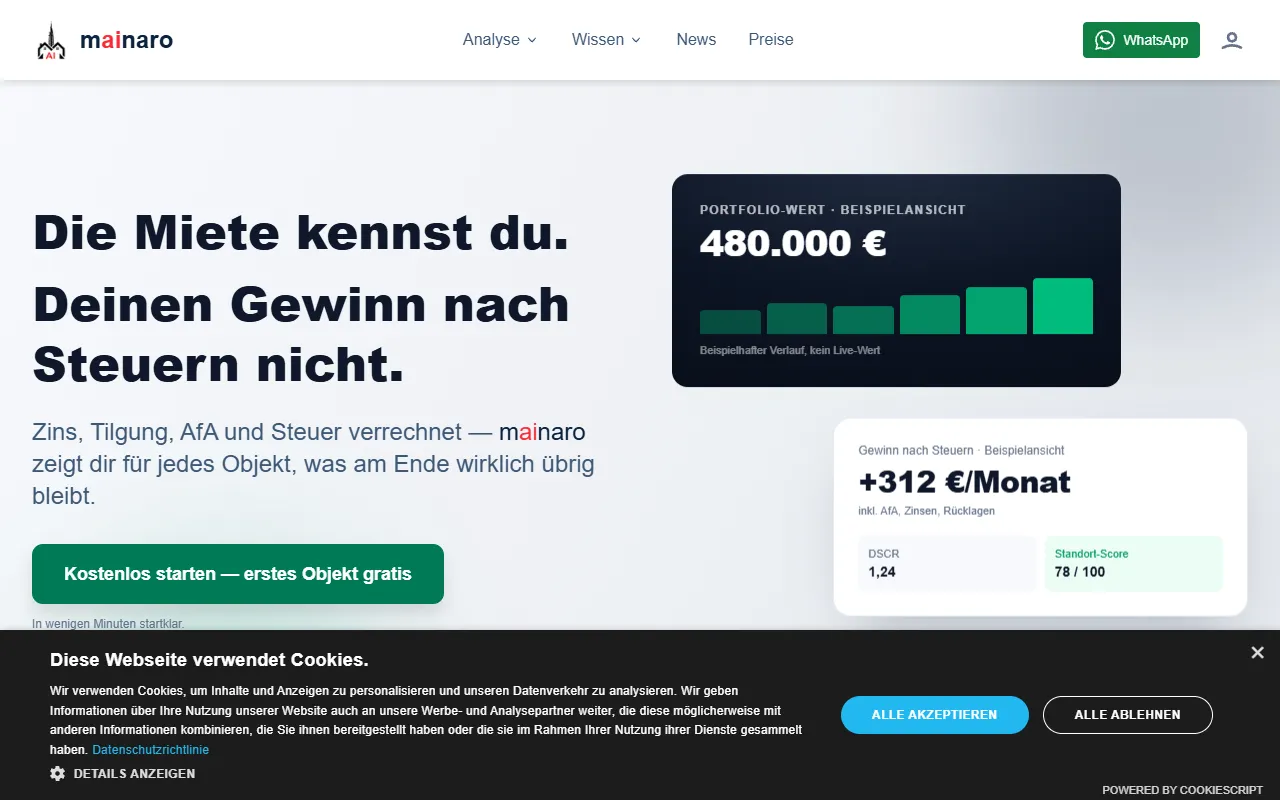
mainaro
AI MarketingVisualizes real estate profits after taxes, allowing users to analyze cash flow and exit simulations for their portfolios. Offers a free location analysis for all 16 federal states, with the first property analysis available at no charge.

AI House Plan
AI Image GenerationGenerate detailed floor plans for houses, rooms, offices, and restaurants using prompts or sketches. Ideal for designers and homeowners seeking quick, editable layouts, with free access and optional paid upgrades for enhanced features.

GenImagePro
AI Image GenerationTransform photos into unique AI-generated visuals, styles, and scenes with GenImagePro’s image-to-image functionality. Ideal for artists, marketers, and anyone needing creative variations, it offers free access with optional paid upgrades.
Get Your AI Tool
In Front of Thousands
Join hundreds of AI tools already featured on theWebrary. Get priority placement, a dedicated listing page, and reach an audience actively searching for AI tools.
1 Month
$5
$6
3 Months
$10
Save 50%
12 Months
$20
Save 75%